About Amtex
From fibre to yarn
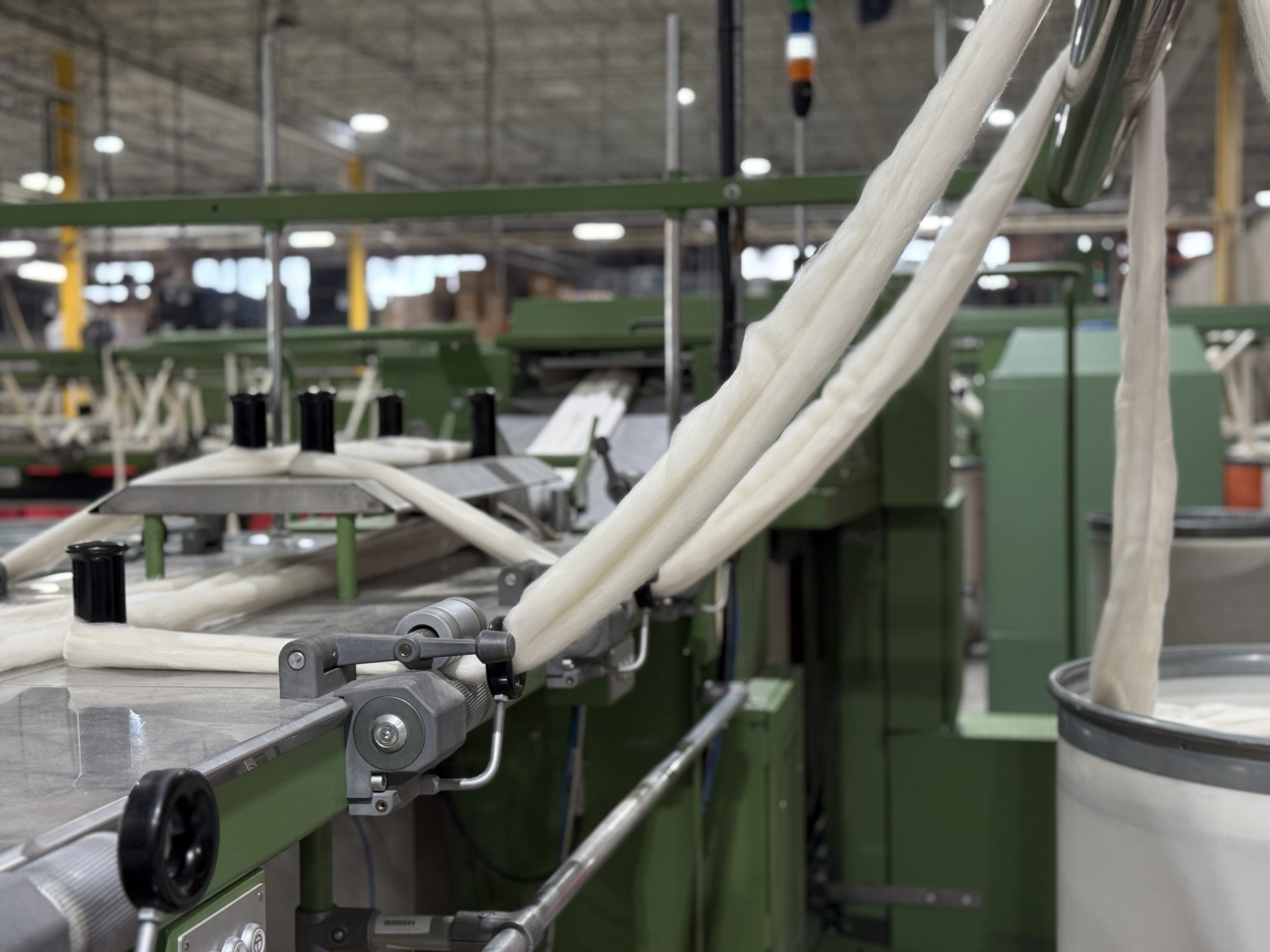
Worsted spinning is a craft of patience and precision. Here is how a fibre becomes an Amtex yarn.
The worsted process
Quality at every step
Worsted yarns are spun from long, combed fibres laid parallel, which is what gives them their smoothness, strength and clean stitch definition.
Fibre selection
Merino, specialty and man-made fibres chosen for fineness, length and strength.
Blending
Fibres are blended to a precise recipe for consistent performance, lot after lot.
Colour
Natural, top-dyed and melange shades, with deep, even colour and good fastness.
Drafting
Drafting and levelling align the fibres and even out the sliver ahead of spinning.
Spinning
Compact and conventional worsted spinning for smooth, strong, low-hairiness yarn.
Twisting & plying
Two-ply to multi-ply constructions, with twist tuned to the end use.
Finishing & winding
Steaming, clearing and winding onto cones, ready for your machines.
Quality control
Count, twist, strength and colour are checked before every shipment.
Compact spinning
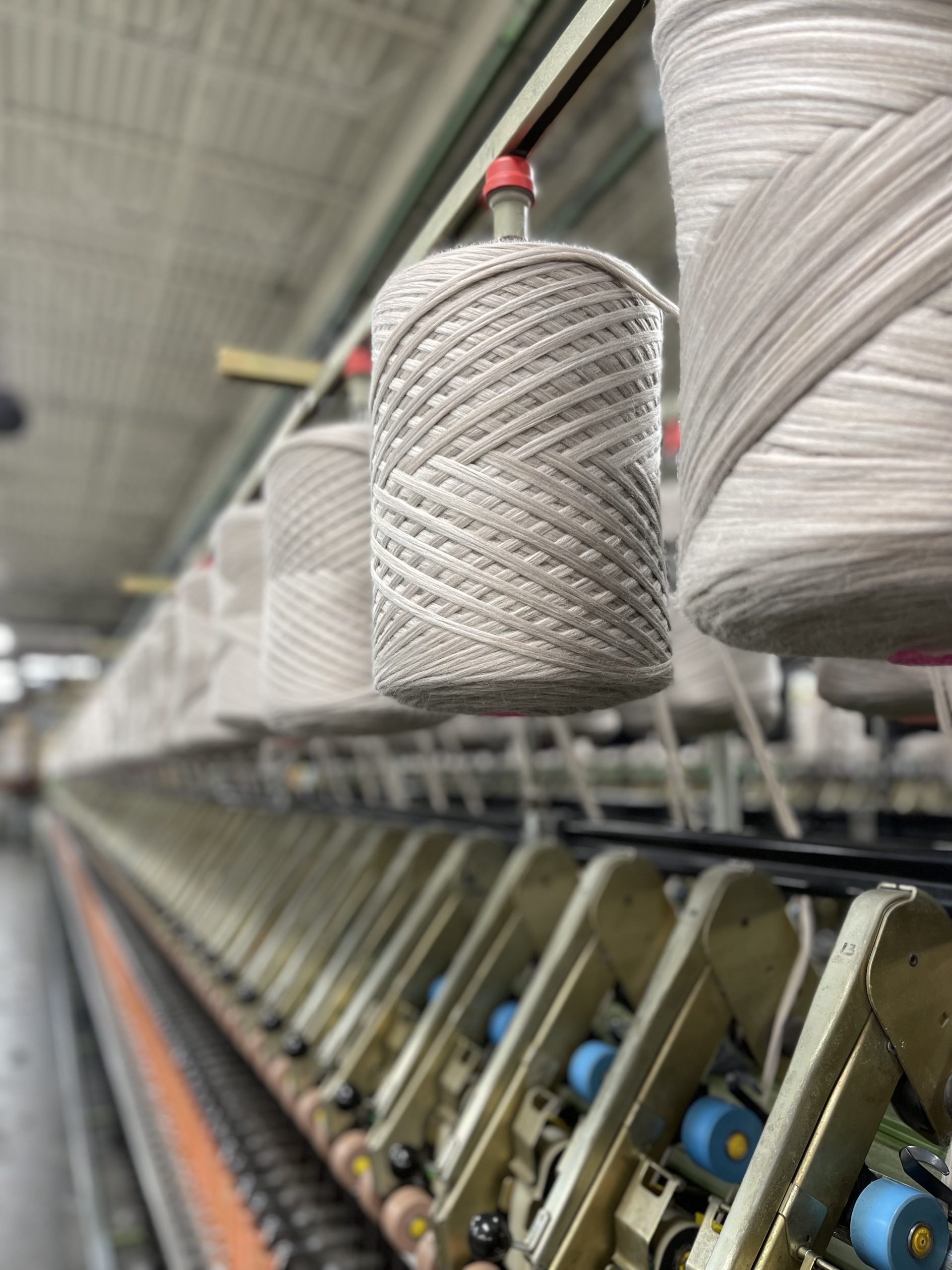
Compact yarns, elite performance
Compact spinning condenses the fibres before they are twisted, so more of them are bound into the yarn. The result is a smoother, stronger yarn with less hairiness and better pilling resistance — ideal for fine-gauge knitwear and hosiery.
Colour
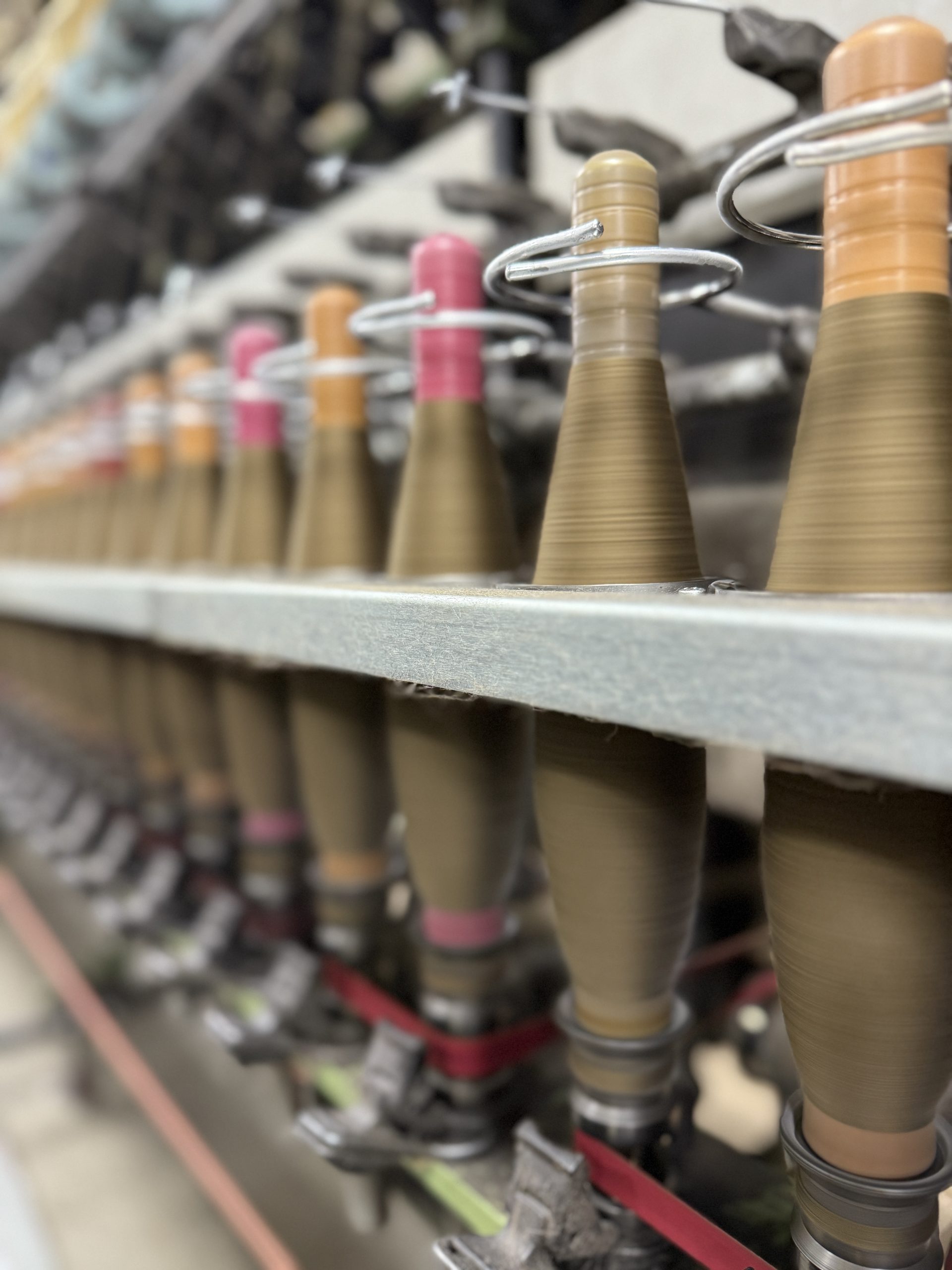
Natural shades and dyed colour
Choose undyed natural yarns ready for piece or garment dyeing, or top-dyed colours and melanges matched to your standard.
CONSISTENCY
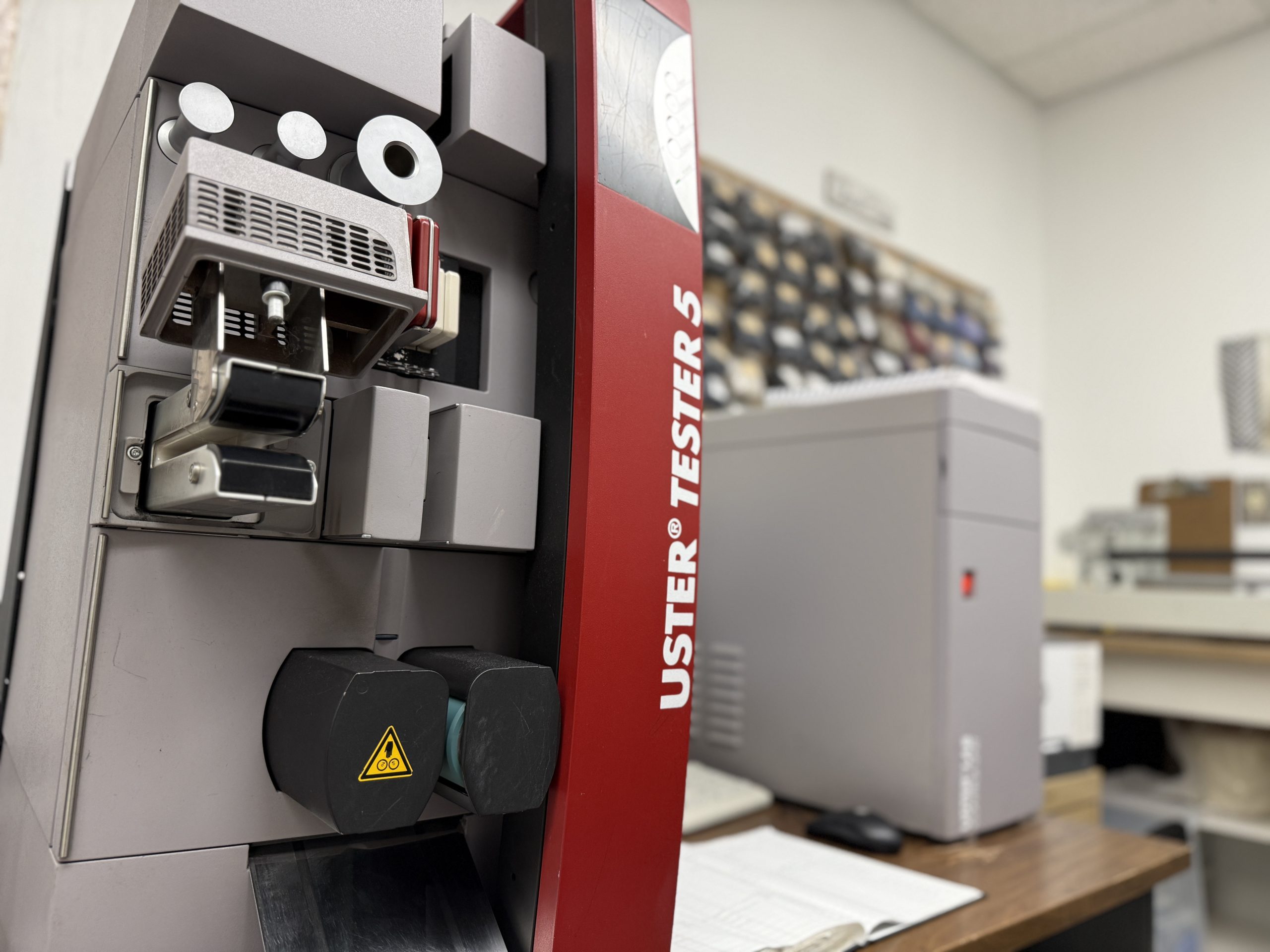
Tested from fibre to finished yarn
Quality starts with the fibre. We test incoming tops on OFDA for mean fibre diameter and its variation, so every blend starts within specification. Finished yarns are tested on the Uster Tester 5 for evenness, thin and thick places, neps and hairiness, alongside count and twist before they ship.
Let’s talk yarn
Have a yarn in mind? Let’s spin it.
Send us your specification — fibre, count, colour and quantity — or ask for samples and shade cards. We reply within one business day.